-
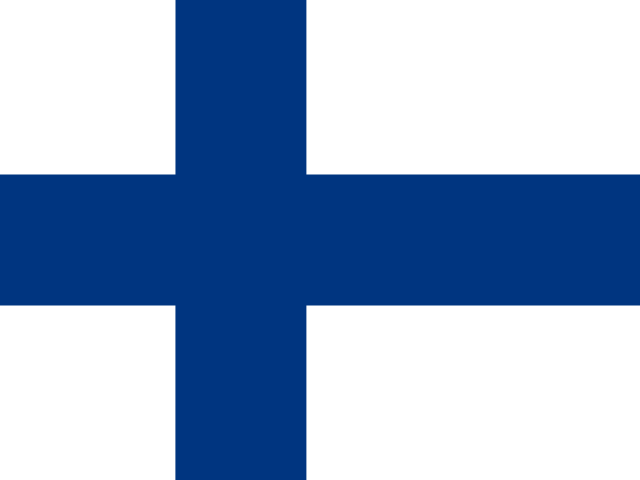
Finland
Finland has one of the most ambitious climate targets, a legal obligation to reach carbon neutrality by 2035. It is making progress towards this target and has one of the lowest levels of reliance on fossil fuels among IEA member countries. Finland’s forests, which historically offset significant greenhouse gas emissions, have become a net emissions source. A continued push towards the energy transition is needed, as imported fossil fuels still account for over one-third of energy supply and cover higher shares in transport and key industries.
- Overview
- Energy mix
- Emissions
- Electricity
-
+ 5 pages

![Finland Flag]()
-
Singapore
…and third party access to facilities such as gas storage is under development. These moves put Singapore ahead of most countries in the Asia-Pacific region and in a good position for a hub-style market to develop.
Singapore’s energy policies have also set strong objectives to 2030, including improving the country’s energy efficiency by 36% from 2005 level. Among other measures in support of this target, Singapore introduced energy efficiency standards and labelling for lamps in 2015. The government also plans to increase solar PV capacity and to reduce the country’s greenhouse gas emissions by 16…- Overview
- Energy mix
- Emissions
- Electricity
-
+ 5 pages

![Singapore Flag]()
-
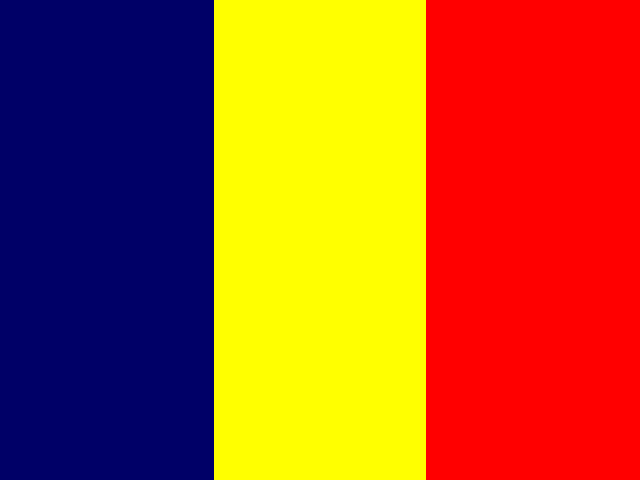
Chad
…as drinking water, basic sanitation and paved roads. Meanwhile, crude oil has become the country’s primary source of export earnings. In 2019, Chad’s energy mix was dominated by biofuels and wastes (85%) with oil products accounting for the rest of the total energy supply. In 2020, less than 5% of the population had access to clean cooking and 8% had access to electricity. The electrification rate is one of the lowest in Sub-Saharan Africa. The country has 30% electricity access target by 2023 and up to 53% by 2030, with a 20% rural access target by 2030.
- Overview
- Energy mix
- Emissions
- Electricity
-
+ 5 pages

![Chad Flag]()
-
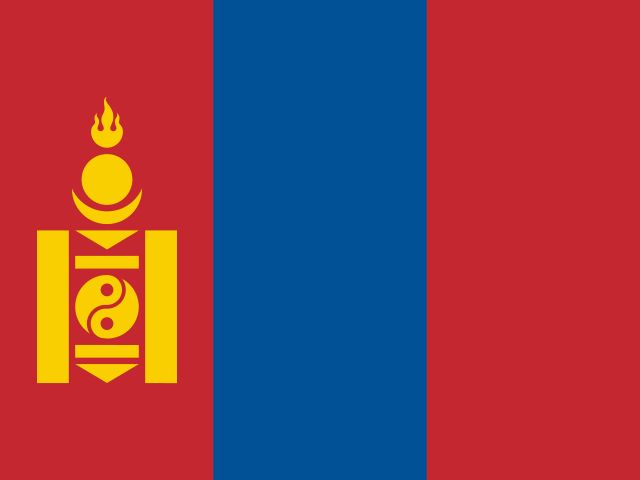
Mongolia
Coal is the first source of electricity generation in Mongolia, but the country has recently begun using hydro, solar and wind power, and has adopted a law aiming to increase and regulate the use of renewables.
- Overview
- Energy mix
- Emissions
- Electricity
-
+ 5 pages
![Mongolia Flag]()
-
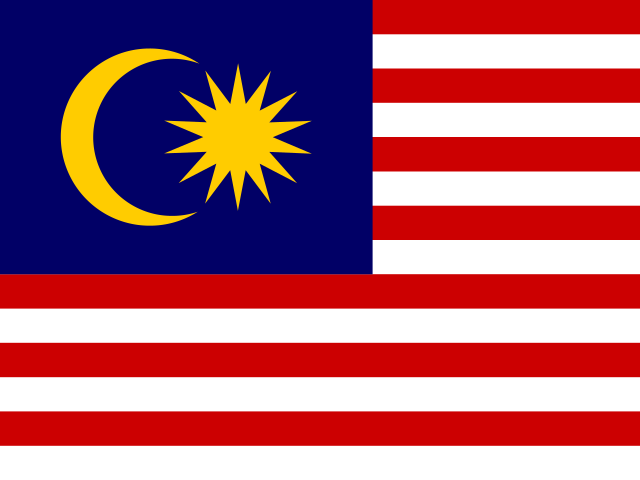
Malaysia
In Malaysia, the share of gas in the power mix decreased from 67% in 2005 to 47% in 2015, led by policies to switch to coal in response to declining domestic gas production. The country holds a large share of Southeast Asia’s fossil fuel resources.
- Overview
- Energy mix
- Emissions
- Electricity
-
+ 5 pages
![Malaysia Flag]()
-
Mauritania
In 2019, Mauritania’s energy mix was dominated by oil products (65%) and biofuels and waste (32%). In 2020, 43% of the population had access to clean cooking which is the highest share in West Africa. In 2020, 47% of the population had access to electricity. For electricity access, the country targets universal access in urban areas and doubling of the current rate in rural areas by 2024, with country-wide universal access by 2030. For clean cooking, the target is 100% access to LPG in urban areas and 50% access to LPG in rural areas by 2030.
- Overview
- Energy mix
- Emissions
- Electricity
-
+ 5 pages
![Mauritania Flag]()
-
Mozambique
In Mozambique, around 40% of people have access to electricity, through the grid or mini/off-grid systems. The government has promoted solar PV solutions in rural areas, reporting that 700 schools and 800 other public buildings now have electricity from solar.
- Overview
- Energy mix
- Emissions
- Electricity
-
+ 5 pages
![Mozambique Flag]()
-
Cyprus
Cyprus adopted the Law on the Promotion of Renewable Energy and Energy Efficiency in the early 2010s, which creates a fund that finances the premium tariff and other costs related to renewable electricity generation.
Note by the Republic of Türkiye (Türkiye): The information in this document with reference to Cyprus relates to the southern part of the Island. There is no single authority representing both Turkish and Greek Cypriot people on the Island. Türkiye recognises the Turkish Republic of Northern Cyprus (TRNC). Until a lasting and equitable solution is found within the context of United Nations, Türkiye shall preserve its…- Overview
- Energy mix
- Emissions
- Electricity
-
+ 5 pages
![Cyprus Flag]()
-
Slovak Republic
…objectives of the Slovak energy policy agenda are: increasing efficiency in the power and end‐use sectors, reducing energy intensity, reducing dependence on energy imports, expanding the use of nuclear power, increasing the share of renewables in the heat and electricity sectors, and supporting the use of alternative fuels for transport. With these sound objectives in place, the government should now focus on the cost‐effective implementation of concrete actions. Mining of coal for electricity production ended in 2023 and an additional nuclear unit was commissioned. The country remains dependent on energy imports from Russia, making energy security a strong…
- Overview
- Energy mix
- Emissions
- Electricity
-
+ 5 pages
![Slovak Republic Flag]()
-
Mali
…its mini-grids by adding PV capacity to diesel power plants. In 2019, Mali’s energy mix was dominated by biofuels and wastes (65%) and oil products (32%), with coal and hydro accounting for the rest. In 2020, less than 5% of the population had access to clean cooking and 52% had access to electricity. For electricity access, the country targets 70% access by 2025, 80% by 2030 and 90% by 2036, with 100% urban access by 2025, and 31% rural access by 2025, 50% by 2030 and 55% by 2036. For clean cooking, Mali targets universal access by 2030.
- Overview
- Energy mix
- Emissions
- Electricity
-
+ 5 pages
![Mali Flag]()