-
United States
The United States introduced major energy and climate policy reforms which put the country on a path towards a clean, secure and affordable energy system for a net zero economy. The reforms aim to strengthen infrastructure deployment and resilience, include a major focus on clean energy manufacturing, improving diverse supply chains and affordability, enhancing equity and the creation of high-quality clean energy jobs.
The US plays a significant role in supporting international energy security as the world’s largest producer of oil and exporter of liquified natural gas. A wave of clean energy investment means the US is today…- Overview
- Energy mix
- Emissions
- Electricity
-
+ 5 pages

![United States Flag]()
-
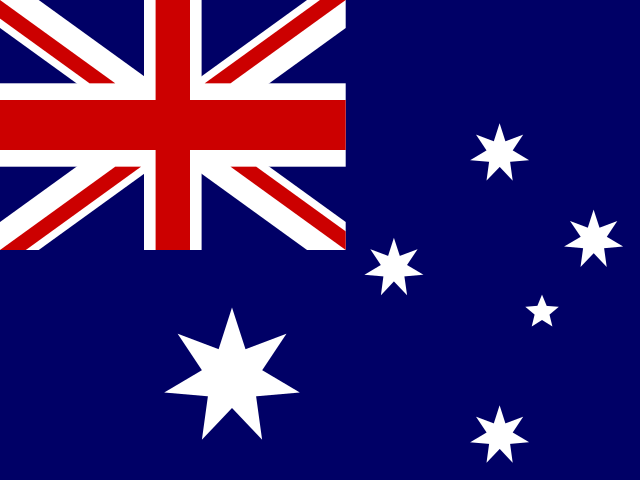
Australia
…Net Zero emissions by 2050, while ensuring a just and inclusive energy transition through the guidance of the Net Zero Authority under the Prime Minister’s office. By 2030, the government aims to reach the clean electricity target of 82% of renewable energy. In addition to this target, Australia is implementing a new 2030 critical minerals strategy and gas market reforms to boost energy security during the transition. Flexibility, fuel availability and resilient infrastructure will become even more vital as Australia’s energy system incorporates very high shares of variable renewables and faces more frequent and more extreme weather events.
- Overview
- Energy mix
- Emissions
- Electricity
-
+ 5 pages

![Australia Flag]()
-
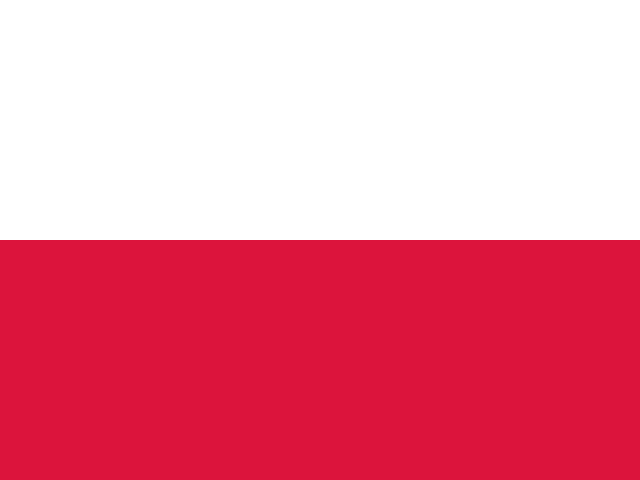
Poland
Poland’s energy system has seen progress on energy transition, despite its reliance on domestic hard coal and lignite. For example, Poland has one of the fastest growing solar PV markets in the European Union and has also seen a strong uptake of heat pumps. Poland is pushing to become a major player in offshore wind, aiming for at least 3.4 GW of capacity by 2030. However, stronger efforts are needed across all sectors to accelerate energy transition and Poland would benefit from greater electricity interconnections with the rest of Europe.
- Overview
- Energy mix
- Emissions
- Electricity
-
+ 5 pages

![Poland Flag]()
-
Montenegro
The Energy Development Strategy of Montenegro sets out objectives and defines mechanisms for the transition from the current energy system to a safe, competitive and environmentally acceptable energy paradigm by 2025. It also provides guidelines for the development of the energy sector with the aim of attracting investors.
Data for Montenegro is included under Serbia until 2004.- Overview
- Energy mix
- Emissions
- Electricity
-
+ 5 pages
![Montenegro Flag]()
-
Costa Rica
Costa Rica’s energy policy aims to move from a fossil fuels based energy system towards renewable energy sources and to expand its power generation capacity, replacing old power generating stations and developing new projects.
- Overview
- Energy mix
- Emissions
- Electricity
-
+ 5 pages

![Costa Rica Flag]()
-
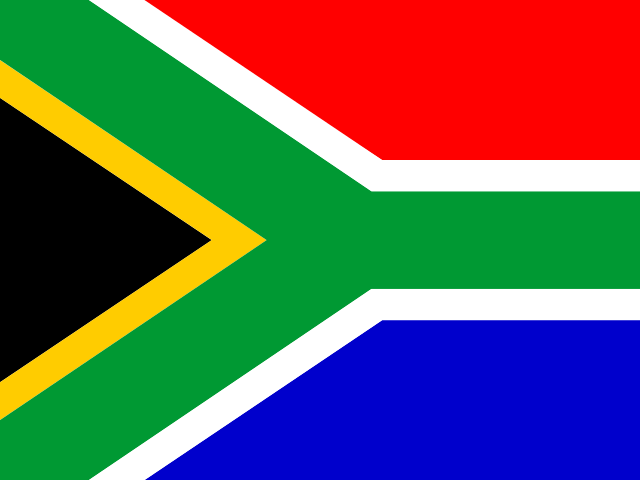
South Africa
Coal is the mainstay of the South African energy system, meeting around 70% of installed power generation capacity. The 2019 Integrated Resource Plan however sets out a long-term diversification of the power mix by 2030 and moves towards lightening the carbon footprint of the energy sector while meeting growing energy demand and ensuring a socio-economically just transition. While the options to diversify the country's electricity mix appear diverse, the affordability of electricity supply looms as a key concern and a potential constraint on diversification. The structure of consumption and of spending on electricity is skewed towards higher…
- Overview
- Energy mix
- Emissions
- Electricity
-
+ 5 pages

![South Africa Flag]()
-
Croatia
Croatia's National Energy Strategy 2009-2020 has three basic objectives: increase security of energy supply, develop competitive energy system and ensure sustainable energy sector development. These objectives are particularly important for the country, as it is heavily dependent on energy imports, resulting in its vulnerability to energy prices fluctuations.
- Overview
- Energy mix
- Emissions
- Electricity
-
+ 5 pages
![Croatia Flag]()
-
Georgia
…an energy sector based largely on hydropower and fuelwood, in addition to imports of fossil fuels. It is also an important transit country for the region, with major oil and gas pipelines running across Georgian territory. Efforts are required to improve energy efficiency and capitalise on the country’s renewable energy potential.
Georgia has made solid progress in the past decade, both in improving the security of its energy supply and in transitioning to a cleaner, more sustainable energy system. Although Georgia is still confronted with many challenges in its transition to a more secure, sustainable and affordable energy future…- Overview
- Energy mix
- Emissions
- Electricity
-
+ 5 pages

![Georgia Flag]()
-
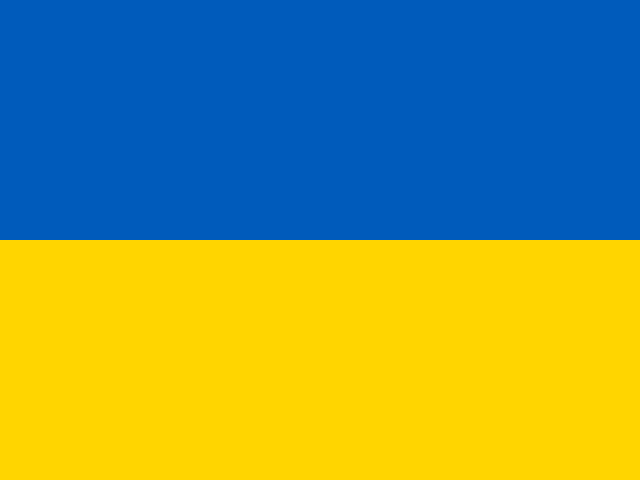
Ukraine
Ukraine is a key country for European and global energy security. Russia’s invasion of Ukraine has pushed it to fundamentally reshape its past dependence on energy imports from Russia.
As the invasion continues, Ukraine is focused on tracking large-scale energy supply disruptions and actively working to recover power and heating for civilians. It is also putting together an ambitious recovery and reconstruction plan, with a strong focus on energy security. In the medium-term, Ukraine’s energy strategy remains focused on European integration, while it aims to an energy system that is ready for a Net Zero future…- Overview
- Energy mix
- Emissions
- Electricity
-
+ 5 pages
![Ukraine Flag]()
-
Romania
By 2020, the objective of Romania is to guarantee the efficient operation of its energy system under security conditions. Romania also plans to meet the obligations set by EU in terms of greenhouse gas emissions through its legislative package “Climate changes – renewable energies”.
- Overview
- Energy mix
- Emissions
- Electricity
-
+ 5 pages
![Romania Flag]()