-
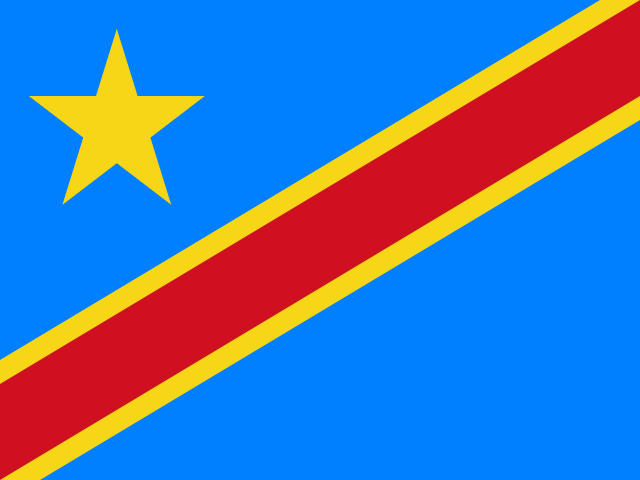
Democratic Republic of the Congo
The Democratic Republic of the Congo has huge hydropower potential while also dealing with extreme energy poverty. Foreign investors are currently partially lifting constraints on the country’s hydropower capacity, which is bringing down the costs of power supply and reducing the share of oil-fired power.
- Overview
- Energy mix
- Emissions
- Electricity
-
+ 5 pages

![Democratic Republic of the Congo Flag]()
-
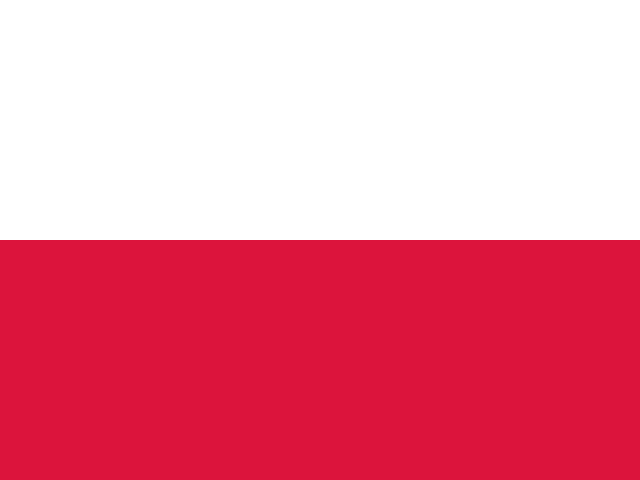
Poland
Poland’s energy system has seen progress on energy transition, despite its reliance on domestic hard coal and lignite. For example, Poland has one of the fastest growing solar PV markets in the European Union and has also seen a strong uptake of heat pumps. Poland is pushing to become a major player in offshore wind, aiming for at least 3.4 GW of capacity by 2030. However, stronger efforts are needed across all sectors to accelerate energy transition and Poland would benefit from greater electricity interconnections with the rest of Europe.
- Overview
- Energy mix
- Emissions
- Electricity
-
+ 5 pages

![Poland Flag]()
-
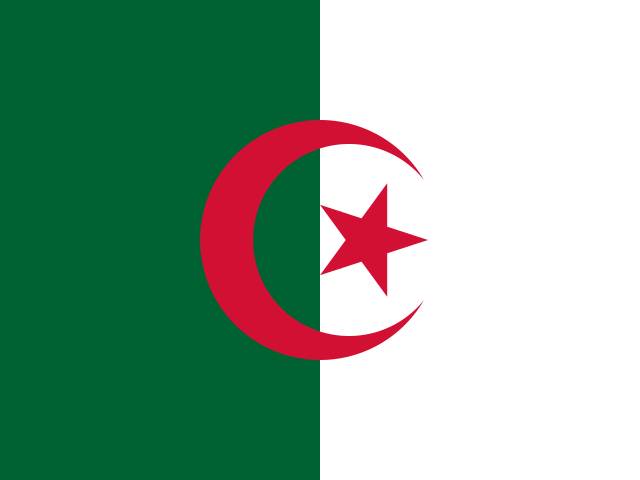
Algeria
Algeria is a large oil and gas producer and exporter. In 2015, the country updated its Renewable Energy and Energy Efficiency Development Plan to 2030, and put greater focus on the deployment of large-scale renewables, including solar PV and onshore wind installations, through various incentive measures.
- Overview
- Energy mix
- Emissions
- Electricity
-
+ 5 pages
![Algeria Flag]()
-
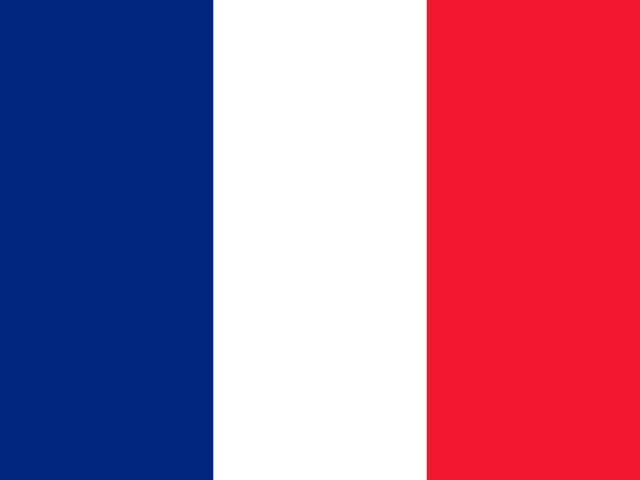
France
France has a very low-carbon electricity mix owing to its large nuclear fleet, the second-largest after the United States. As an early leader in setting out an ambitious energy transition, France legislated a net zero emissions target for 2050 in its 2019 Energy and Climate Act and aims at reducing by 55% its greenhouse gas emissions by 2030. A national low-carbon strategy with 5-year carbon budgets and a multiannual plan for energy investments implement the long-term target.
Acknowledging the need to maintain electricity security in the longer term and a low-carbon footprint France invests…- Overview
- Energy mix
- Emissions
- Electricity
-
+ 5 pages
![France Flag]()
-
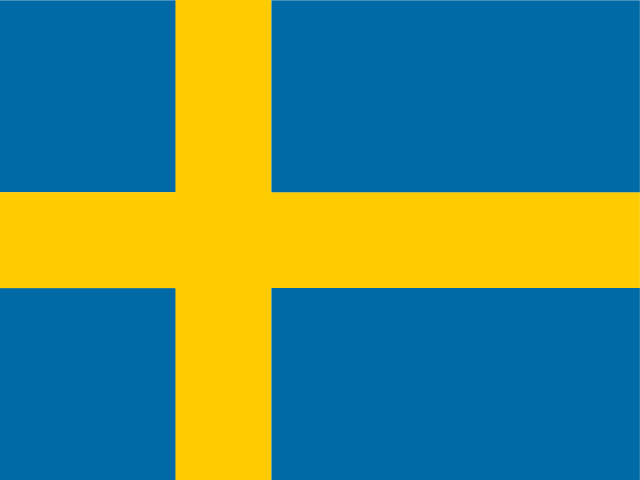
Sweden
Sweden is a global leader in decarbonisation and has targets to cut greenhouse gas emissions 59% by 2030 compared with 2005, and to have a net-zero carbon economy by 2045. Sweden was the first country to introduce carbon pricing and has the highest carbon price in the world, which has proven effective at driving decarbonisation. Most of Sweden’s electricity supply comes from hydro and nuclear, along with a growing contribution from wind. Heating is supplied mainly through bioenergy-based district heating and heat pumps.
Most of Sweden’s greenhouse gas emissions come from the transport sector, which remains…- Overview
- Energy mix
- Emissions
- Electricity
-
+ 5 pages
![Sweden Flag]()
-
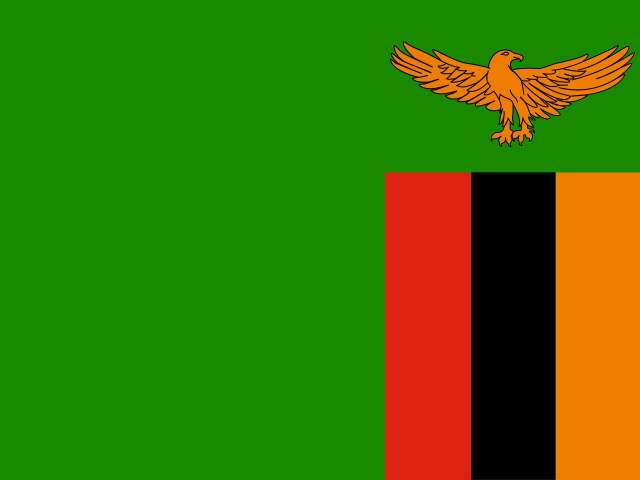
Zambia
Coal production is set to increase in Zambia, but exports remain limited to trade with neighbouring countries. The country has recently made good progress regarding electrification rates through a large push for mini-grid and off-grid solutions in rural areas.
- Overview
- Energy mix
- Emissions
- Electricity
-
+ 5 pages
![Zambia Flag]()
-
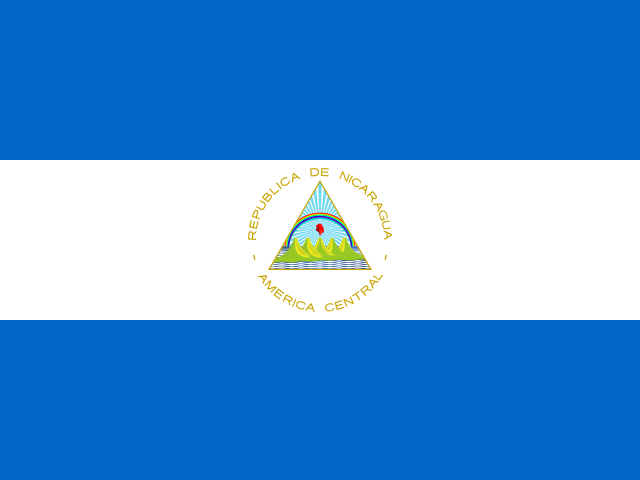
Nicaragua
The National Energy Policy of Nicaragua establishes a policy framework for the development and exploitation of renewable sources. The law sets the objective of prioritizing the use of renewable energy in the national energy mix and of stabilizing energy prices using renewables.
- Overview
- Energy mix
- Emissions
- Electricity
-
+ 5 pages

![Nicaragua Flag]()
-
Botswana
Coal production is set to increase in Botswana, but exports remain limited and mainly involve trade with neighbouring countries. Regarding electrification rates, the country has recently made good progress through a large push for mini-grid and off-grid solutions in rural areas.
- Overview
- Energy mix
- Emissions
- Electricity
-
+ 5 pages
![Botswana Flag]()
-
Thailand
Thailand’s energy policy focuses on reducing dependence on natural gas to enhance energy security. With the costs reduction of variable renewable energy, conventional Thai power generation starts giving way to alternative sources. The country’s energy policy must evolve to accommodate this change.
- Overview
- Energy mix
- Emissions
- Electricity
-
+ 5 pages

![Thailand Flag]()
-
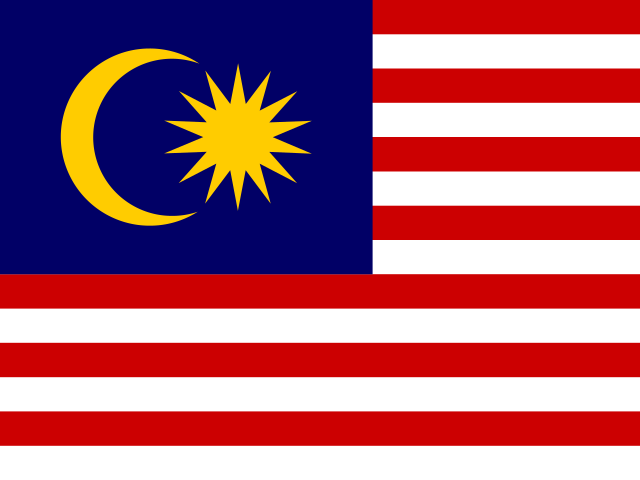
Malaysia
In Malaysia, the share of gas in the power mix decreased from 67% in 2005 to 47% in 2015, led by policies to switch to coal in response to declining domestic gas production. The country holds a large share of Southeast Asia’s fossil fuel resources.
- Overview
- Energy mix
- Emissions
- Electricity
-
+ 5 pages
![Malaysia Flag]()