-
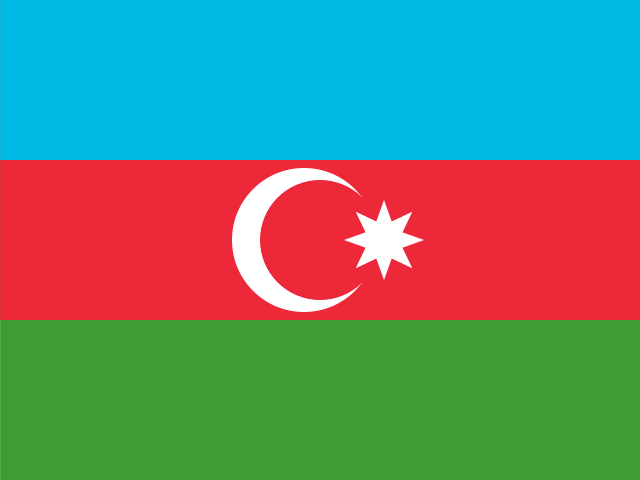
Azerbaijan
Azerbaijan has one of the highest energy self-sufficiency ratios in the world as a major crude oil and natural gas producer. While the renewable sector has not seen as much attention, the government is now looking to stimulate investment and accelerate deployment, allowing for diversification of domestic energy consumption. In addition, the government is working on a new energy strategy that will set the stage for further policy shifts. Azerbaijan is part of the EU4Energy Programme, an initiative focused on evidence-based policymaking for the energy sector.
- Overview
- Energy mix
- Emissions
- Electricity
-
+ 5 pages

![Azerbaijan Flag]()
-
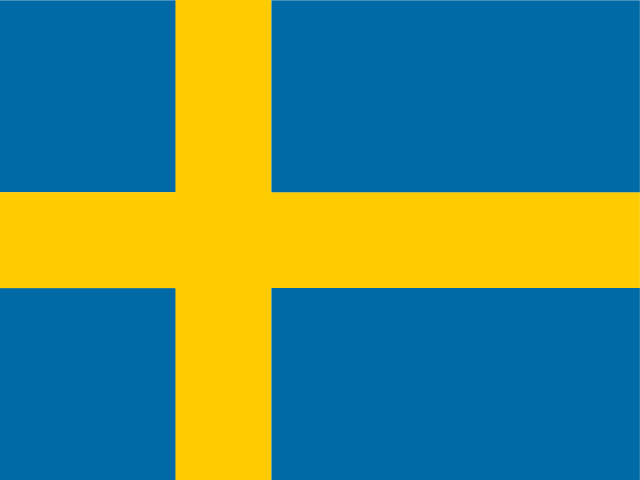
Sweden
Sweden is a global leader in decarbonisation and has targets to cut greenhouse gas emissions 59% by 2030 compared with 2005, and to have a net-zero carbon economy by 2045. Sweden was the first country to introduce carbon pricing and has the highest carbon price in the world, which has proven effective at driving decarbonisation. Most of Sweden’s electricity supply comes from hydro and nuclear, along with a growing contribution from wind. Heating is supplied mainly through bioenergy-based district heating and heat pumps.
Most of Sweden’s greenhouse gas emissions come from the transport sector, which remains…- Overview
- Energy mix
- Emissions
- Electricity
-
+ 5 pages

![Sweden Flag]()
-
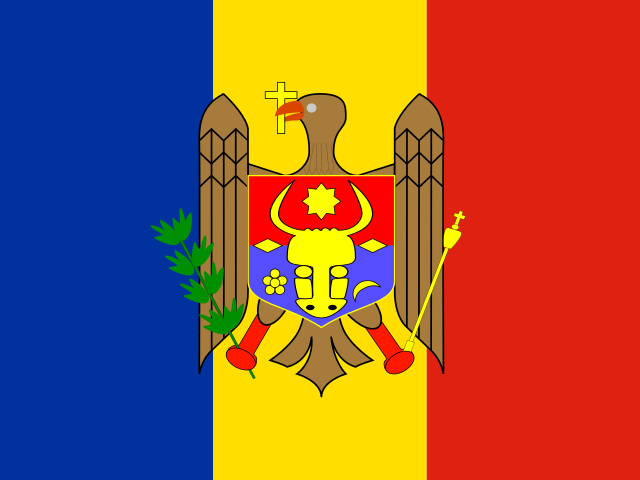
Moldova
Moldova is almost fully dependent on fossil fuel and electricity imports, with natural gas serving most of its energy needs. The government plans to diversify the energy mix with renewables such as wind and solar. Moldova is part of the EU4Energy Programme, which focuses on improving evidence-based policy making for the energy sector.
- Overview
- Energy mix
- Emissions
- Electricity
-
+ 5 pages
![Moldova Flag]()
-
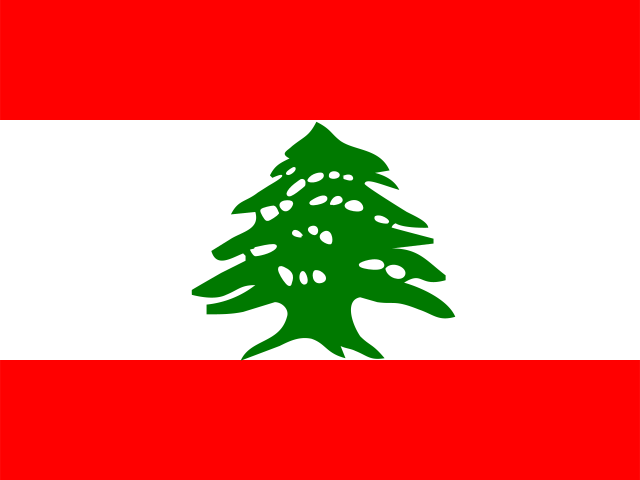
Lebanon
The government of Lebanon launched the "National Energy Efficiency and Renewable Energy Action" in 2010 a mechanism dedicated to the financing of green energy projects in the country. Private sector entities can apply for subsidised loans for any type of environmentally friendly projects.
- Overview
- Energy mix
- Emissions
- Electricity
-
+ 5 pages

![Lebanon Flag]()
-
France
France has a very low-carbon electricity mix owing to its large nuclear fleet, the second-largest after the United States. As an early leader in setting out an ambitious energy transition, France legislated a net zero emissions target for 2050 in its 2019 Energy and Climate Act and aims at reducing by 55% its greenhouse gas emissions by 2030. A national low-carbon strategy with 5-year carbon budgets and a multiannual plan for energy investments implement the long-term target.
Acknowledging the need to maintain electricity security in the longer term and a low-carbon footprint France invests…- Overview
- Energy mix
- Emissions
- Electricity
-
+ 5 pages
![France Flag]()
-
Sri Lanka
Sri Lanka’s primary energy supply mainly comes from oil and coal. Almost 40% of Sri Lanka’s electricity came from hydropower in 2017 but coal’s shares in power generation has been increasing since 2010. Sri Lanka is reaching universal access to electricity but clean cooking remain an issue with 15 million people still relying on biomass to cook.
- Overview
- Energy mix
- Emissions
- Electricity
-
+ 5 pages

![Sri Lanka Flag]()
-
Lithuania
Lithuania has undergone several energy transitions over the past decade. Despite importing a large share of its electricity, the country successfully ended its reliance on Russian energy imports in March 2022. Along with its neighbours, Estonia and Latvia, Lithuania disconnected from the Russian electricity system and completed the synchronisation of its grid with the Continental European Synchronous Area (CESA) in February 2025. By 2030, Lithuania aims to shift from being an electricity importer to becoming a net exporter. Although the country’s energy consumption still depends heavily on imported fossil fuels, the share of bioenergy in the domestic energy supply…
- Overview
- Energy mix
- Emissions
- Electricity
-
+ 5 pages
![Lithuania Flag]()
-
Spain
Spain is at the forefront of the energy transition due to its energy and climate change policies. The current Spanish framework for energy and climate is based on the 2050 objectives of national climate neutrality, 100% renewable energy in the electricity mix and 97% renewable energy in the total energy mix. As such, it is centred on the massive development of renewable energy, particularly solar, wind and renewable hydrogen, increasing energy efficiency and improving electrification. This is an opportunity for the country to not only stimulate the economy and by creating jobs through the modernisation of industry, but also to…
- Overview
- Energy mix
- Emissions
- Electricity
-
+ 5 pages
![Spain Flag]()
-
Poland
Poland’s energy system has seen progress on energy transition, despite its reliance on domestic hard coal and lignite. For example, Poland has one of the fastest growing solar PV markets in the European Union and has also seen a strong uptake of heat pumps. Poland is pushing to become a major player in offshore wind, aiming for at least 3.4 GW of capacity by 2030. However, stronger efforts are needed across all sectors to accelerate energy transition and Poland would benefit from greater electricity interconnections with the rest of Europe.
- Overview
- Energy mix
- Emissions
- Electricity
-
+ 5 pages
![Poland Flag]()
-
Türkiye
Rapid economic and population growth in Türkiye over the past two decades have not only driven strong growth in energy demand, but also an associated increase in import dependency. As a result, Türkiye has pursued a restructuring of its energy system with the aim of rationalising energy demand growth, lowering energy prices and slowing the pace of import growth.
These reforms have included measures targeted at modernisation, liberalisation and increased domestic production capacity. Notably, Türkiye has seen considerable diversification of its energy mix in the past decade. Renewable electricity generation has tripled in the past decade and the commissioning of…- Overview
- Energy mix
- Emissions
- Electricity
-
+ 5 pages
![Türkiye Flag]()