-
Czechia
Czechia has decoupled economic growth from energy consumption since 2009, yet the country’s energy and carbon intensity remain above the IEA average, which highlights the need to make energy efficiency the “first principle” of energy policy. Fossil fuels are still essential building blocks of the energy mix with coal as the single largest fuel for total energy supply and electricity generation. The country is committed to phase-out coal by 2033 and is putting in place a framework for an inclusive transition. Nuclear is the second largest electricity source and the government plans to build new nuclear units at…
- Overview
- Energy mix
- Emissions
- Electricity
-
+ 5 pages

![Czechia Flag]()
-
Lithuania
Lithuania has undergone several energy transitions over the past decade. Despite importing a large share of its electricity, the country successfully ended its reliance on Russian energy imports in March 2022. Along with its neighbours, Estonia and Latvia, Lithuania disconnected from the Russian electricity system and completed the synchronisation of its grid with the Continental European Synchronous Area (CESA) in February 2025. By 2030, Lithuania aims to shift from being an electricity importer to becoming a net exporter. Although the country’s energy consumption still depends heavily on imported fossil fuels, the share of bioenergy in the domestic energy supply…
- Overview
- Energy mix
- Emissions
- Electricity
-
+ 5 pages
![Lithuania Flag]()
-
Ghana
In Ghana, electrification rates have gradually increased over the past 20 years, reaching almost 85% in 2017 and building on successful electrification plans. The country relies on a diversified energy mix and hosts the largest hydropower project of the Western African region.
- Overview
- Energy mix
- Emissions
- Electricity
-
+ 5 pages

![Ghana Flag]()
-
Peru
Peru’s government identified the development of electricity from renewable energy sources as a public necessity of national interest. The country established a National Renewable Energy Development Plan to be funded by the Annual Budget Law, external debt operations, direct investments and contributions from international institutions.
- Overview
- Energy mix
- Emissions
- Electricity
-
+ 5 pages

![Peru Flag]()
-
Gabon
Almost two-thirds of the population of Gabon has access to electricity. The country can partially rely on its 150 thousand barrels per day hydrocarbon liquids production and has recently implemented a new petroleum legislation.
- Overview
- Energy mix
- Emissions
- Electricity
-
+ 5 pages
![Gabon Flag]()
-
Croatia
Croatia's National Energy Strategy 2009-2020 has three basic objectives: increase security of energy supply, develop competitive energy system and ensure sustainable energy sector development. These objectives are particularly important for the country, as it is heavily dependent on energy imports, resulting in its vulnerability to energy prices fluctuations.
- Overview
- Energy mix
- Emissions
- Electricity
-
+ 5 pages
![Croatia Flag]()
-
Senegal
In Senegal, 65% of the population has access to electricity. Strong policies and incentives have supported liquefied petroleum gas (LPG) use and less than 25% of the urban population now relies on solid biomass for cooking.
- Overview
- Energy mix
- Emissions
- Electricity
-
+ 5 pages
![Senegal Flag]()
-
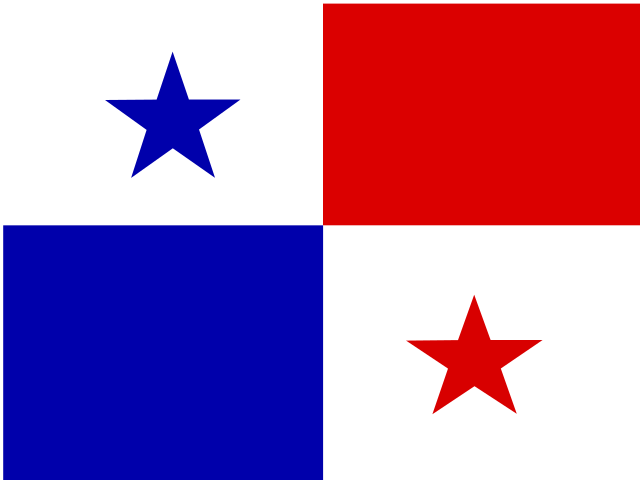
Panama
Panama's National Energy Plan 2015–2050 outlines long-term strategy for the country’s energy sector development, including renewables. The Plan established that 15% of Panama’s generation capacity will come from renewables by 2030 and 50% by 2050.
- Overview
- Energy mix
- Emissions
- Electricity
-
+ 5 pages
![Panama Flag]()
-
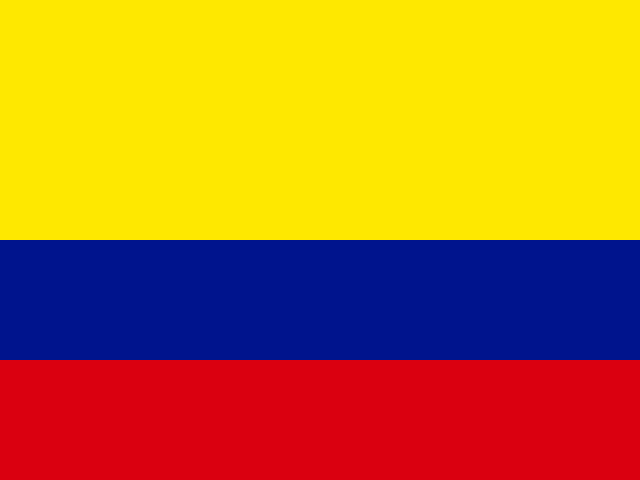
Colombia
Colombia launched the Energy Plan 2050 in 2016 , which aims to diversify the country’s energy resources and ensure a reliable energy supply by including wind power plants, solar PV and geothermal energy generation in the country's electric mix.
- Overview
- Energy mix
- Emissions
- Electricity
-
+ 5 pages
![Colombia Flag]()
-
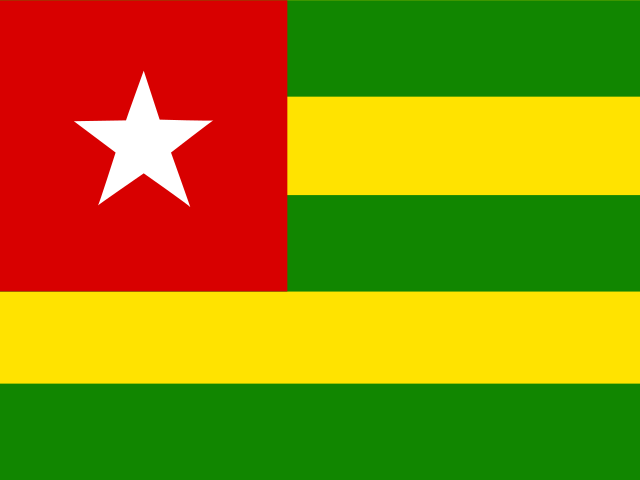
Togo
Less than half of the Togolese population has access to electricity. The country has a relatively diversified energy mix and more than 13% of its final energy consumption comes from renewable supplies of energy, mainly hydropower.
- Overview
- Energy mix
- Emissions
- Electricity
-
+ 5 pages
![Togo Flag]()