-
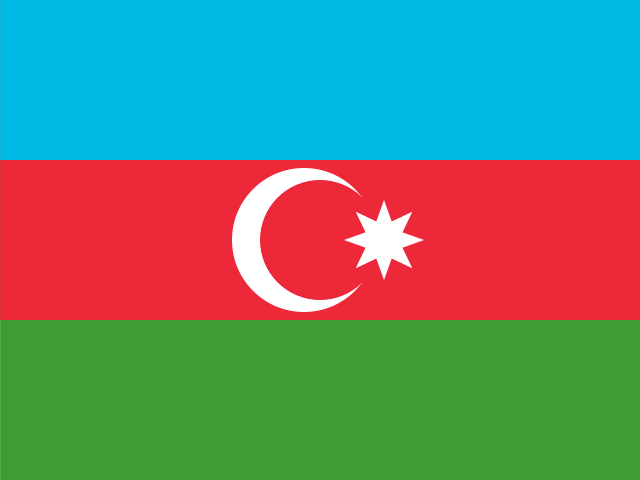
Azerbaijan
Azerbaijan has one of the highest energy self-sufficiency ratios in the world as a major crude oil and natural gas producer. While the renewable sector has not seen as much attention, the government is now looking to stimulate investment and accelerate deployment, allowing for diversification of domestic energy consumption. In addition, the government is working on a new energy strategy that will set the stage for further policy shifts. Azerbaijan is part of the EU4Energy Programme, an initiative focused on evidence-based policymaking for the energy sector.
- Overview
- Energy mix
- Emissions
- Electricity
-
+ 5 pages

![Azerbaijan Flag]()
-
Croatia
Croatia's National Energy Strategy 2009-2020 has three basic objectives: increase security of energy supply, develop competitive energy system and ensure sustainable energy sector development. These objectives are particularly important for the country, as it is heavily dependent on energy imports, resulting in its vulnerability to energy prices fluctuations.
- Overview
- Energy mix
- Emissions
- Electricity
-
+ 5 pages

![Croatia Flag]()
-
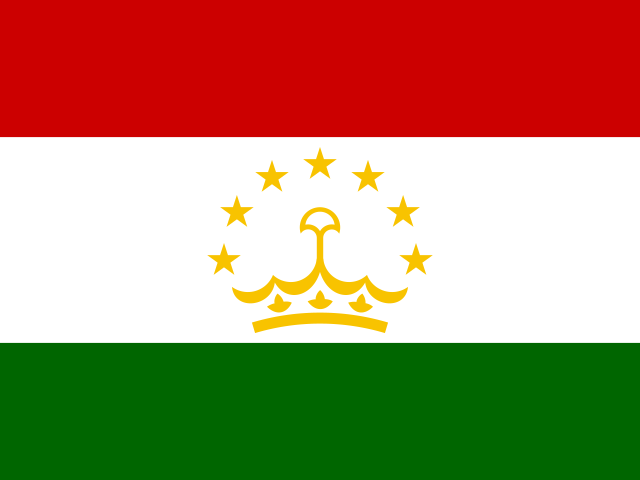
Tajikistan
Hydropower is the main source of energy in Tajikistan, followed by imported oil, gas and coal. However, Tajikistan's energy sector is prone to supply shocks, due to seasonal shortages. Energy policy focuses on providing uninterrupted energy access to all users while improving regional co‑operation and energy sector efficiency, but significant domestic and foreign investment will be necessary for continued energy sector development. Tajikistan is part of the EU4Energy Programme, an initiative focused on evidence-based policymaking for the energy sector.
- Overview
- Energy mix
- Emissions
- Electricity
-
+ 5 pages
![Tajikistan Flag]()
-
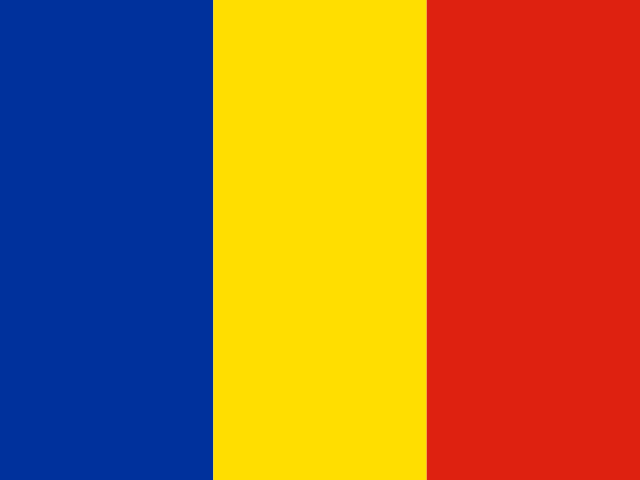
Romania
By 2020, the objective of Romania is to guarantee the efficient operation of its energy system under security conditions. Romania also plans to meet the obligations set by EU in terms of greenhouse gas emissions through its legislative package “Climate changes – renewable energies”.
- Overview
- Energy mix
- Emissions
- Electricity
-
+ 5 pages
![Romania Flag]()
-
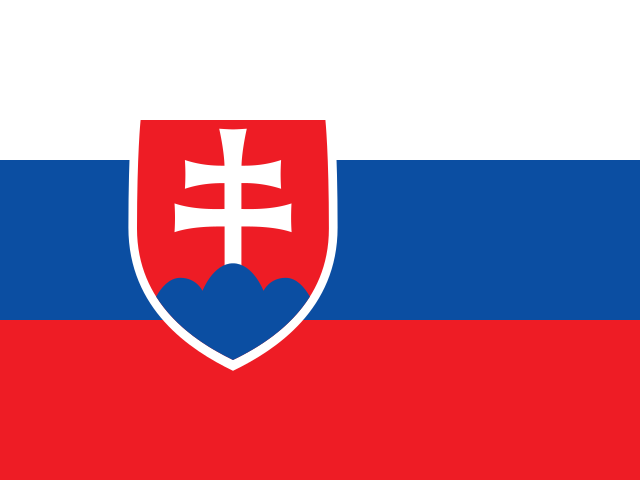
Slovak Republic
…end‐use sectors, reducing energy intensity, reducing dependence on energy imports, expanding the use of nuclear power, increasing the share of renewables in the heat and electricity sectors, and supporting the use of alternative fuels for transport. With these sound objectives in place, the government should now focus on the cost‐effective implementation of concrete actions. Mining of coal for electricity production ended in 2023 and an additional nuclear unit was commissioned. The country remains dependent on energy imports from Russia, making energy security a strong focus area and the diversification of supply, fuels and renewable capacity need to accelerate.
- Overview
- Energy mix
- Emissions
- Electricity
-
+ 5 pages
![Slovak Republic Flag]()
-
Armenia
Imports of oil and gas cover 77% of Armenia’s energy needs. Current energy policy is focused on developing indigenous energy sources, mainly renewable, and on replacing the country’s main nuclear reactor. Energy Efficiency policy has also become a bigger priority as energy security and reliability remain key focus areas. Armenia is part of the EU4Energy Programme, an initiative focused on evidence-based policymaking for the energy sector.
- Overview
- Energy mix
- Emissions
- Electricity
-
+ 5 pages
![Armenia Flag]()
-
Estonia
Estonia has achieved a notable reduction in greenhouse gas emissions thanks mainly to lowering its reliance on electricity generation from domestic oil shale, an energy rich sedimentary rock. However, oil shale remains the main energy source and imported fossil fuels still plan a major role, especially in transport. Estonia’s forests, which historically offset significant greenhouse gas emissions, have become a net emissions source. Estonia is aiming to accelerate its clean energy transition with a target to cover 100% of annual electricity demand with renewables by 2030 as part of a larger package to achieve climate neutrality by 2050. It…
- Overview
- Energy mix
- Emissions
- Electricity
-
+ 5 pages
![Estonia Flag]()
-
Türkiye
Rapid economic and population growth in Türkiye over the past two decades have not only driven strong growth in energy demand, but also an associated increase in import dependency. As a result, Türkiye has pursued a restructuring of its energy system with the aim of rationalising energy demand growth, lowering energy prices and slowing the pace of import growth.
These reforms have included measures targeted at modernisation, liberalisation and increased domestic production capacity. Notably, Türkiye has seen considerable diversification of its energy mix in the past decade. Renewable electricity generation has tripled in the past decade and the commissioning of…- Overview
- Energy mix
- Emissions
- Electricity
-
+ 5 pages
![Türkiye Flag]()
-
Uruguay
In 2010 the Ministry of Energy, Mining and Industry of Uruguay approved Decree 354 on the Promotion of Renewable Energies meant to increase dramatically the share of electricity generation from renewable sources in the country.
- Overview
- Energy mix
- Emissions
- Electricity
-
+ 5 pages

![Uruguay Flag]()
-
Poland
Poland’s energy system has seen progress on energy transition, despite its reliance on domestic hard coal and lignite. For example, Poland has one of the fastest growing solar PV markets in the European Union and has also seen a strong uptake of heat pumps. Poland is pushing to become a major player in offshore wind, aiming for at least 3.4 GW of capacity by 2030. However, stronger efforts are needed across all sectors to accelerate energy transition and Poland would benefit from greater electricity interconnections with the rest of Europe.
- Overview
- Energy mix
- Emissions
- Electricity
-
+ 5 pages
![Poland Flag]()