-
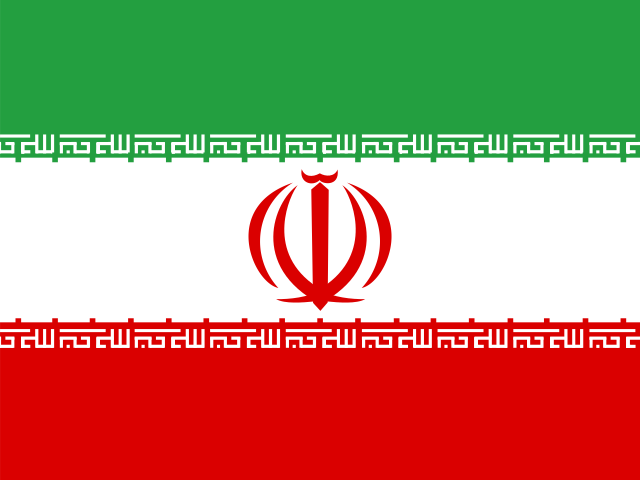
Iran
Iran has in place legislation obliging the Minister of Energy to increase the share of renewables and clean power plants to at least 5% of the country's capacity until the end of 2021.
- Overview
- Energy mix
- Emissions
- Electricity
-
+ 5 pages

![Iran Flag]()
-
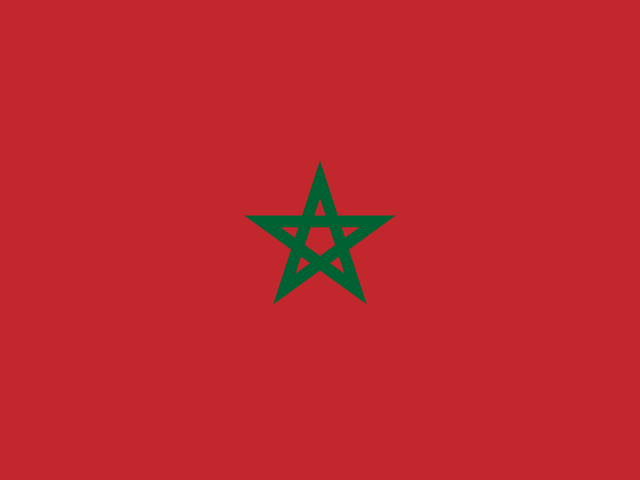
Morocco
…in Marrakesh in 2016.
The development of renewables is helping to improve energy security as well as deliver on Morocco’s clean energy and climate change commitments. Morocco is making strong progress towards affordable, reliable, sustainable and modern energy in line with the United Nations Sustainable Development Goals (SDG 7). The government has achieved almost full access to electricity for its rural population, and it is developing the country’s significant renewable energy resources. However, progress in reducing the energy intensity of Morocco’s economy is more difficult to achieve. While the share of renewables in electricity is progressing fast…- Overview
- Energy mix
- Emissions
- Electricity
-
+ 5 pages

![Morocco Flag]()
-
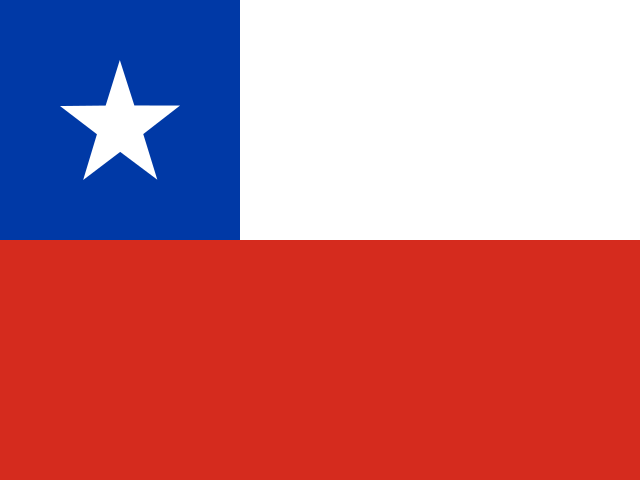
Chile
…In 2022, Chile’s Ministry of Energy published an update to its the Long-Term Energy Policy (PELP, first published in 2015), which re-emphasises the pledge to net-zero, laying out a clear decarbonisation pathway that addresses all sectors of the national economy.
Based on its excellent renewable energy resources, Chile has taken a globally leading role in clean energy, and emerged as a world-class destination for solar and wind energy developers. Its legislation encourages investment in generating capacity across the electricity sector. The expanded role of the state in energy planning has helped to boost project development…- Overview
- Energy mix
- Emissions
- Electricity
-
+ 5 pages

![Chile Flag]()
-
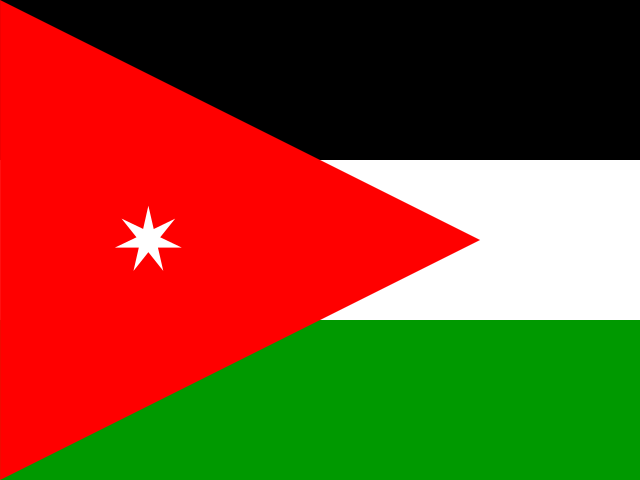
Jordan
The government of Jordan targets 10% of energy mix to come from renewables by 2020. The country has set up a fund, as well as duties and taxes exemptions on all manufactured locally and imported renewable energy sources equipment and systems.
- Overview
- Energy mix
- Emissions
- Electricity
-
+ 5 pages
![Jordan Flag]()
-
Brazil
Brazil’s energy policies measure up well against the world’s most urgent energy challenges. Access to electricity across the country is almost universal and renewables meet almost 45% of primary energy demand, making Brazil’s energy sector one of the least carbon-intensive in the world. Total primary energy demand has doubled in Brazil since 1990, led by strong growth in electricity consumption and in demand for transport fuels on the back of robust economic growth and a burgeoning middle class.
Large hydropower plants account for around 80% of domestic electricity generation, making the Brazilian electricity mix one of…- Overview
- Energy mix
- Emissions
- Electricity
-
+ 5 pages
![Brazil Flag]()
-
Denmark
Denmark has been an early leader in decarbonisation and in 2022 the government announced a net zero by 2045 target, aiming at 110% emissions reductions by 2050. Denmark’s technology leadership is important in the areas of offshore wind, biomethane and district heating. The government has expanded these categories to adopt a strategic focus on carbon capture and storage (CCUS) and hydrogen. The government has a robust energy and climate governance under the Danish Ministry of Climate, Energy and Utilities and ‘the year wheel’ of Climate Act of 2020 ensures annual policy actions and funding. Among IEA countries, Denmark has…
- Overview
- Energy mix
- Emissions
- Electricity
-
+ 5 pages

![Denmark Flag]()
-
Laos
Laos’ 2011 Renewable Energy Development Strategy aims to achieve a renewable energy share of 30% in total energy consumption by 2025. The policy encourages investment in renewables and small power development for self-sufficiency and grid connection.
- Overview
- Energy mix
- Emissions
- Electricity
-
+ 5 pages

![Laos Flag]()
-
Romania
By 2020, the objective of Romania is to guarantee the efficient operation of its energy system under security conditions. Romania also plans to meet the obligations set by EU in terms of greenhouse gas emissions through its legislative package “Climate changes – renewable energies”.
- Overview
- Energy mix
- Emissions
- Electricity
-
+ 5 pages
![Romania Flag]()
-
Greece
Greece is making progress on its energy transition, including implementing reforms to standardise and simplify licensing procedures for renewable projects and investigating options for offshore wind. Coal fired generation, once the main source of electricity, will be phased out by 2028 at the latest and EUR 5 billion has been committed to assist impacted communities. Auctions are driving strong deployment of solar PV, onshore wind and battery storage. There are also projects for interconnections and renewables to decarbonise electricity on Greek islands. However, more effort is needed boost electrification and improve efficiency in transport and buildings.
- Overview
- Energy mix
- Emissions
- Electricity
-
+ 5 pages
![Greece Flag]()
-
Austria
Austria is committed to reaching climate neutrality by 2040. Over three quarter of electricity generation already comes from renewables, with a target of achieving a 100% renewable electricity supply by 2030 (national balance). This requires investments to make networks more resilient and flexible, optimise demand side management, and updating the legal and regulatory framework to allow more consumer participation. Buildings and transport account for around half of total emissions . To progress the transition in these sectors, the government supports building renovation, switching from fossil fuels to sustainable heating systems, the electrification of transport and invests in public transport infrastructure.
- Overview
- Energy mix
- Emissions
- Electricity
-
+ 5 pages
![Austria Flag]()