-
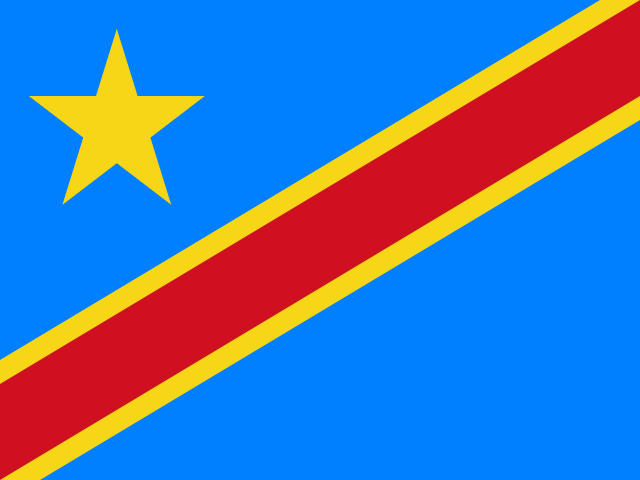
Democratic Republic of the Congo
The Democratic Republic of the Congo has huge hydropower potential while also dealing with extreme energy poverty. Foreign investors are currently partially lifting constraints on the country’s hydropower capacity, which is bringing down the costs of power supply and reducing the share of oil-fired power.
- Overview
- Energy mix
- Emissions
- Electricity
-
+ 5 pages

![Democratic Republic of the Congo Flag]()
-
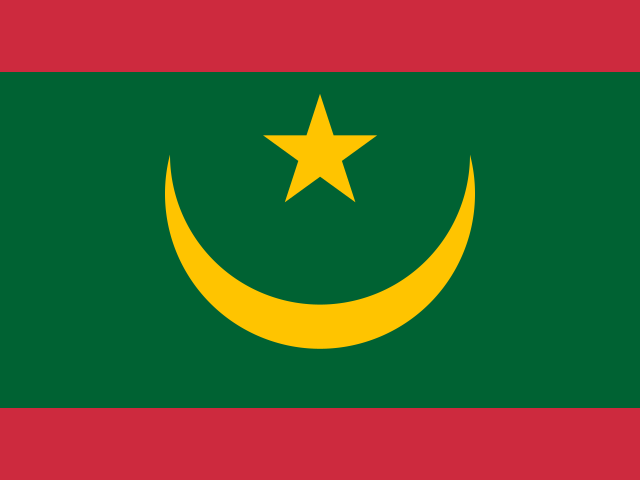
Mauritania
In 2019, Mauritania’s energy mix was dominated by oil products (65%) and biofuels and waste (32%). In 2020, 43% of the population had access to clean cooking which is the highest share in West Africa. In 2020, 47% of the population had access to electricity. For electricity access, the country targets universal access in urban areas and doubling of the current rate in rural areas by 2024, with country-wide universal access by 2030. For clean cooking, the target is 100% access to LPG in urban areas and 50% access to LPG in rural areas by 2030.
- Overview
- Energy mix
- Emissions
- Electricity
-
+ 5 pages
![Mauritania Flag]()
-
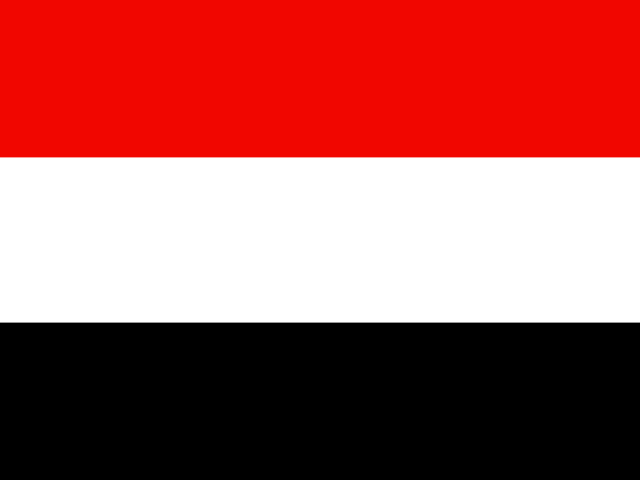
Yemen
In Yemen, less than half of the population has access to electricity. In 2010, the government launched a National Strategy for renewable energy and energy efficiency, which aims to develop grid and off-grid renewable energy and targets a 15% share of renewable electricity generation by 2025.
- Overview
- Energy mix
- Emissions
- Electricity
-
+ 5 pages

![Yemen Flag]()
-
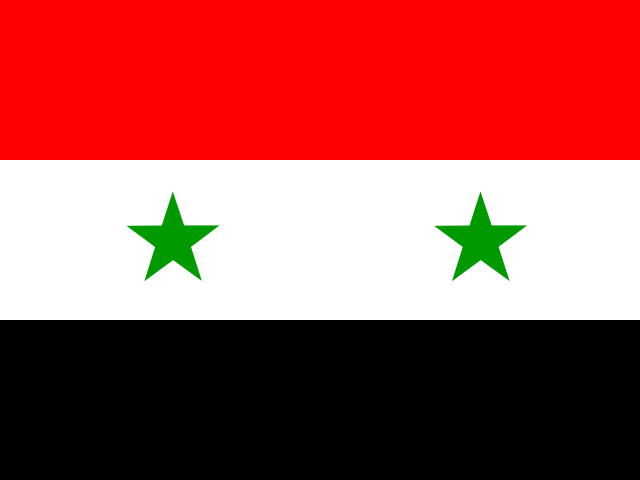
Syria
The 2009 Syrian Law on Energy Conservation aims to fulfil the sustainable development requirements of the country and deploy various renewable energy applications. Private and public institutions must commit to energy efficiency practices, use renewables and high energy- efficiency equipment.
- Overview
- Energy mix
- Emissions
- Electricity
-
+ 5 pages
![Syria Flag]()
-
Burkina Faso
In 2019, Burkina Faso’s energy mix was dominated by biofuels and wastes, with oil products accounting for one-third of the total energy supply. In 2020, 11% of the population had access to clean cooking and only 21% had access to electricity, making Burkina Faso one of the world’s least-electrified countries. For electricity, the country has a target of 95% access for urban areas and 50% for rural areas by 2030. For clean cooking, Burkina Faso has a universal access target for urban areas and 65% in rural areas by 2030. The target for LPG urban penetration…
- Overview
- Energy mix
- Emissions
- Electricity
-
+ 5 pages
![Burkina Faso Flag]()
-
Kosovo
This designation is without prejudice to positions on status, and is in line with United Nations Security Council Resolution 1244/99 and the Opinion of the International Court of Justice on Kosovo’s declaration of independence.
- Overview
- Energy mix
- Emissions
- Electricity
-
+ 5 pages

![Kosovo Flag]()
-
Canada
Canada has set an ambitious target to cut greenhouse gas emissions by 40-45% from 2005 levels by 2030 and to reach net zero emissions by 2050. Canada’s energy and economic profile presents both challenges and opportunities to achieving these targets given its profile as a major producer, consumer and exporter of energy. Energy production and use in Canada accounts for over 80% of the country’s GHG emissions, with oil and gas production alone accounting for around a quarter. Canada’s electricity system is already among the cleanest in the world, with heavy dominance of hydropower as well…
- Overview
- Energy mix
- Emissions
- Electricity
-
+ 5 pages

![Canada Flag]()
-
Chile
Chile’s energy policy has evolved dynamically in recent years. In response to changes in the domestic and international environment, significant institutional and policy reforms as well as major infrastructure projects have been carried out. In 2022, Chile’s Ministry of Energy published an update to its the Long-Term Energy Policy (PELP, first published in 2015), which re-emphasises the pledge to net-zero, laying out a clear decarbonisation pathway that addresses all sectors of the national economy.
Based on its excellent renewable energy resources, Chile has taken a globally leading role in clean energy, and emerged as a…- Overview
- Energy mix
- Emissions
- Electricity
-
+ 5 pages

![Chile Flag]()
-
Jamaica
The government of Jamaica adopted a national Energy Policy in 2010 , which establishes a goal of 20% of renewable energy in the energy mix by 2030. This Strategic Framework also addresses both the supply and demand energy issues that the country faces.
- Overview
- Energy mix
- Emissions
- Electricity
-
+ 5 pages
![Jamaica Flag]()
-
Mozambique
In Mozambique, around 40% of people have access to electricity, through the grid or mini/off-grid systems. The government has promoted solar PV solutions in rural areas, reporting that 700 schools and 800 other public buildings now have electricity from solar.
- Overview
- Energy mix
- Emissions
- Electricity
-
+ 5 pages
![Mozambique Flag]()