-
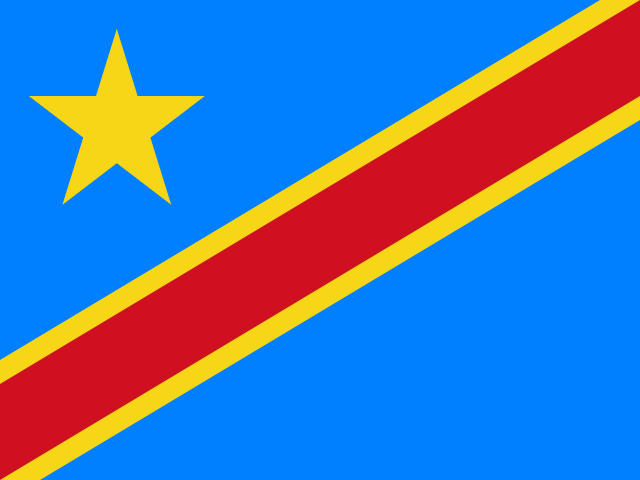
Democratic Republic of the Congo
The Democratic Republic of the Congo has huge hydropower potential while also dealing with extreme energy poverty. Foreign investors are currently partially lifting constraints on the country’s hydropower capacity, which is bringing down the costs of power supply and reducing the share of oil-fired power.
- Overview
- Energy mix
- Emissions
- Electricity
-
+ 5 pages

![Democratic Republic of the Congo Flag]()
-
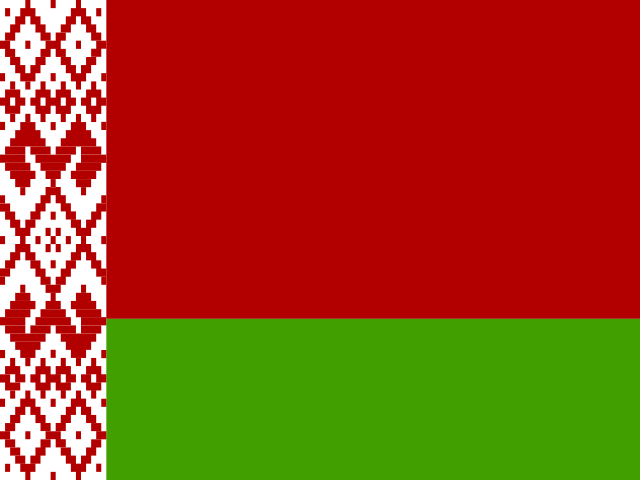
Belarus
Energy policy in Belarus focuses on providing reliable energy while reducing import–dependence, particularly on natural gas from a single supplier. The government is contemplating attractive investment measures and fuel diversification to reduce natural gas consumption and include more coal and renewables into the country's energy mix, while developing local energy sources and introducing nuclear power.
Belarus has also prioritized improving energy efficiency in electricity and heat production and is phasing out subsidies for electricity, heat and gas, which is expected to make the energy sector more market-focused and investor-friendly. Belarus is part of the EU4Energy Programme…- Overview
- Energy mix
- Emissions
- Electricity
-
+ 5 pages

![Belarus Flag]()
-
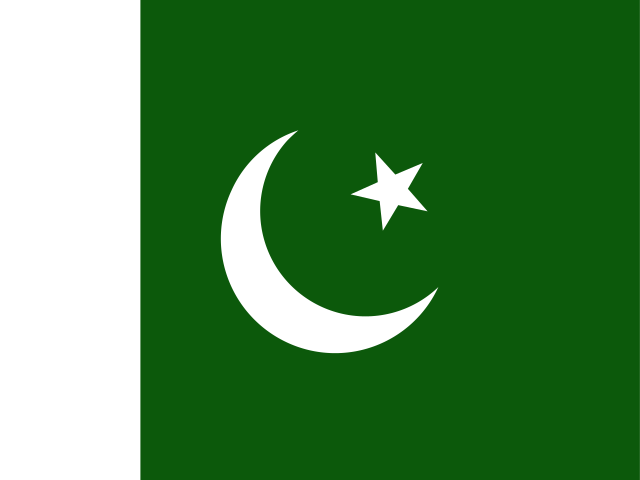
Pakistan
In Pakistan, most of the primary energy supply comes from oil and natural gas. Hydropower is the main renewable source of energy in the country but wind and solar PV’s shares are slowly growing. More than 40 million people remain without access to electricity and half the population lack access to clean cooking facilities.
- Overview
- Energy mix
- Emissions
- Electricity
-
+ 5 pages

![Pakistan Flag]()
-
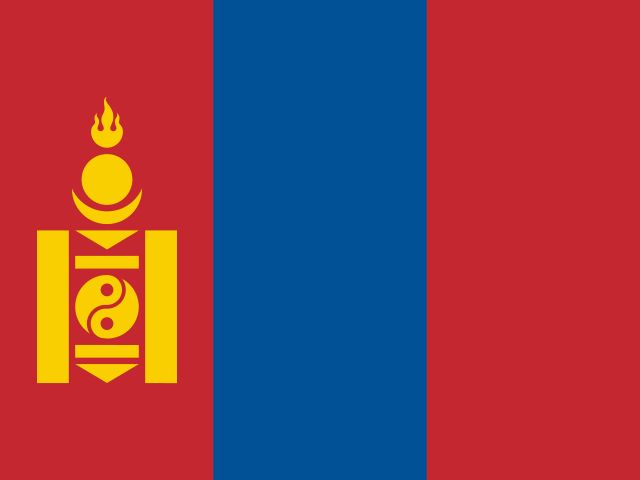
Mongolia
Coal is the first source of electricity generation in Mongolia, but the country has recently begun using hydro, solar and wind power, and has adopted a law aiming to increase and regulate the use of renewables.
- Overview
- Energy mix
- Emissions
- Electricity
-
+ 5 pages
![Mongolia Flag]()
-
Montenegro
The Energy Development Strategy of Montenegro sets out objectives and defines mechanisms for the transition from the current energy system to a safe, competitive and environmentally acceptable energy paradigm by 2025. It also provides guidelines for the development of the energy sector with the aim of attracting investors.
Data for Montenegro is included under Serbia until 2004.- Overview
- Energy mix
- Emissions
- Electricity
-
+ 5 pages
![Montenegro Flag]()
-
Tunisia
Tunisia mostly relies on gas imports to meet its primary energy needs: almost 97% of its electricity generation came from gas in 2016. However, energy policy puts the emphasis on renewable energy. Electricity generation from wind power strongly increased since 2014.
- Overview
- Energy mix
- Emissions
- Electricity
-
+ 5 pages
![Tunisia Flag]()
-
Indonesia
Indonesia’s imports of oil have rapidly increased in recent years. This resource-rich nation is the world’s fourth-largest producer of coal and Southeast Asia’s biggest gas supplier. The country is the largest producer of biofuels worldwide and it is scaling up efforts to exploit its renewable energy potential. Indonesia's importance is underscored by its sizeable population of 250 million people – the fourth-largest in the world – and its significant role as a major producer and consumer of energy in regional and international markets. Indonesia is also the largest economy in ASEAN and an active member…
- Overview
- Energy mix
- Emissions
- Electricity
-
+ 5 pages
![Indonesia Flag]()
-
South Sudan
South Sudan is one of Eastern Africa's major oil resource holders but exported more than 85% of its production in 2014. Only 1% of the population had access to electricity in the country in 2017.
- Overview
- Energy mix
- Emissions
- Electricity
-
+ 5 pages
![South Sudan Flag]()
-
Cambodia
Cambodia’s electrification rate is the second-lowest among South East Asian countries. Cambodia plans to increase its power generation capacity by building hydropower and coal-fired plants by 2025, which can contribute to improve self-sufficiency of power supply.
- Overview
- Energy mix
- Emissions
- Electricity
-
+ 5 pages
![Cambodia Flag]()
-
Cameroon
Electrification rates are relatively high in Cameroon compared to the Central African region: 54% of the population has access to electricity, while consumption remains low. The country produced 70 kb/d of oil in 2013, but production is gradually declining.
- Overview
- Energy mix
- Emissions
- Electricity
-
+ 5 pages
![Cameroon Flag]()